
MEASUREMENT FRAMEWORK
Campaign tracking that gives your team confidence
See more than click counts. Connect every channel, message and destination to what people do next—so your team can celebrate what works, improve what does not and invest with greater confidence.
- Online and offline traffic
- Structured campaign links
- Visitor journey context
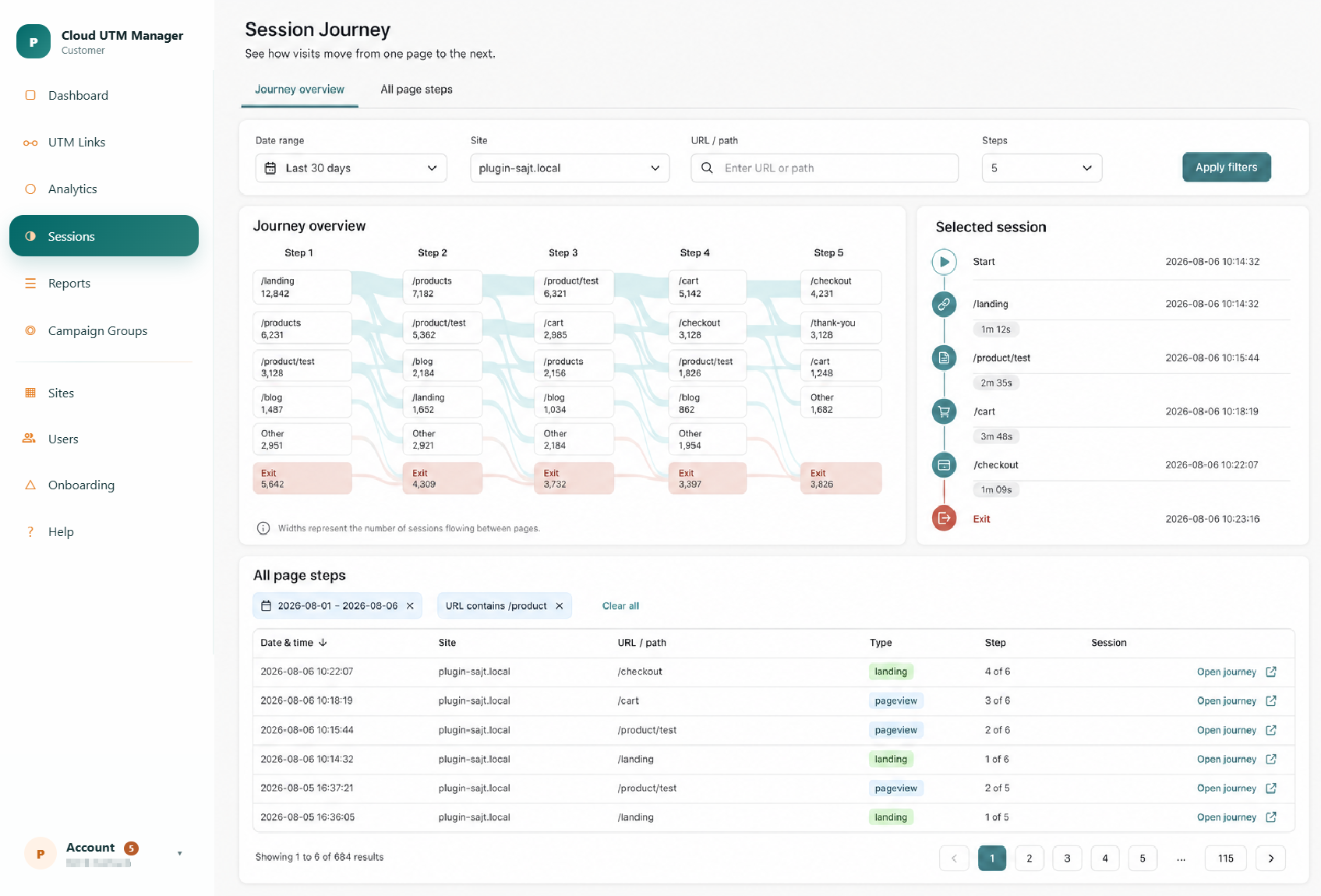
Every channel in one story
Bring paid, owned, partner and offline traffic together.
Every link has a purpose
Keep every campaign activity connected to its goal.
Every visit adds context
Understand the path from first interest to meaningful action.
Decisions you can stand behind
Use comparable data to choose the next best move.
BEYOND CLICK COUNTS
See the people and outcomes behind every click
Traffic volume alone cannot show which message connected, where visitors continued or whether the campaign supported a meaningful result. Structured links and visitor journey context give every number a clearer story.
PLAN
Define success before launch
Choose the conversion, engagement or journey signal that matters before the first link is distributed. Measurement should follow the campaign goal.
TRACK
Connect every placement
Use consistent campaign links and QR codes across ads, email, social, partners, events and print so every entry point is identifiable.
LEARN
Compare outcomes, not noise
Group results by channel, campaign and creative variant, then use visitor journey context to understand why one path performed better.
THE TRACKING FOUNDATION
A complete campaign tracking workflow without the overwhelm
GOAL
Measurement objective
Define the action or business outcome the campaign should influence and identify the signals available on the destination site.
CHANNEL
Traffic source
Document every channel and placement that will distribute the campaign, including offline entry points that need QR tracking.
LINK
UTM structure
Apply approved source, medium, campaign and creative values so each visit arrives with consistent acquisition context.
PAGE
Destination experience
Match the promise in the campaign to a relevant page and preserve required query parameters, redirects and conversion paths.
JOURNEY
Visitor behavior
Follow the pages and interactions that occur after arrival to understand how campaign traffic moves toward or away from the goal.
REPORT
Decision-ready output
Report the dimensions that answer the original question and compare campaigns using the same definitions and time windows.
TRACKING MAP
One campaign, several measurable entry points
Paid social → tagged landing page
Email → tagged product page
Event poster → UTM-enabled QR code
Partner link → tagged resource page
All routes connect to one campaign report and visitor journey.
Quality controls before launch
- Confirm one owner for campaign data
- Validate every destination and redirect
- Use approved UTM source and medium values
- Test conversions and important journey events
- Record launch dates and reporting windows
LAUNCH WITH CONFIDENCE
Launch with confidence in four clear stages
01
Write the measurement brief
Document the campaign goal, audience, channels, destinations, conversion signals and reporting questions in one place.
02
Create controlled links
Generate a unique tagged link or QR code for every meaningful placement while keeping the campaign value consistent.
03
Test the complete journey
Open each link, confirm parameters survive redirects and verify that the destination and conversion path work on desktop and mobile.
04
Review and improve
Compare channel, placement and journey performance after launch. Save the conclusions beside the campaign so the next plan starts with evidence.
COMMON QUESTIONS
Questions about campaign tracking
UTM parameters are a practical way to preserve source, medium, campaign and creative context. They work best alongside conversion events and visitor journey data.
Create a destination URL with the correct UTM parameters, convert it into a QR code and use a distinct content or placement value for each poster, package, event or printed asset.
Start with the campaign goal. Useful measures may include qualified visits, journey depth, form submissions, purchases, downloads or another outcome connected to the intended audience action.
KEEP LEARNING
Strengthen each part of the tracking system
UTM Strategy
Define governance, ownership and the standards behind campaign tracking.
UTM Link Builder
Create controlled links and QR codes for every campaign placement.
START WITH STRUCTURE
Create a UTM strategy before the next campaign launches
Ready to see which campaigns truly move people?
UTM Manager Cloud brings campaign links, QR codes and visitor journeys into one view—so your team can understand impact and move forward together.